Trip Facts
General trp informations2+
Moderate to fairly hard
Teahouse
4100m
B, L, D
Jeep
May - June
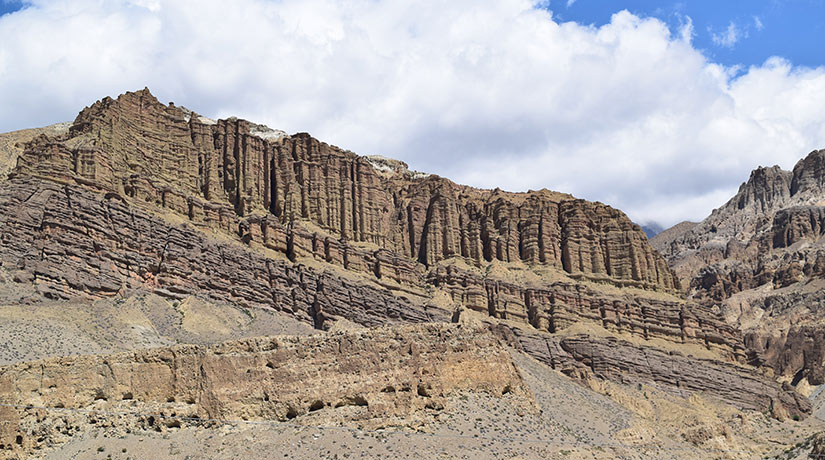
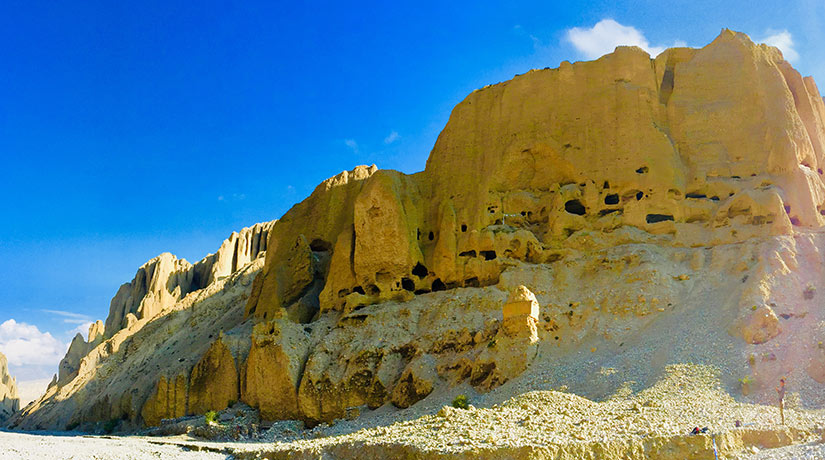
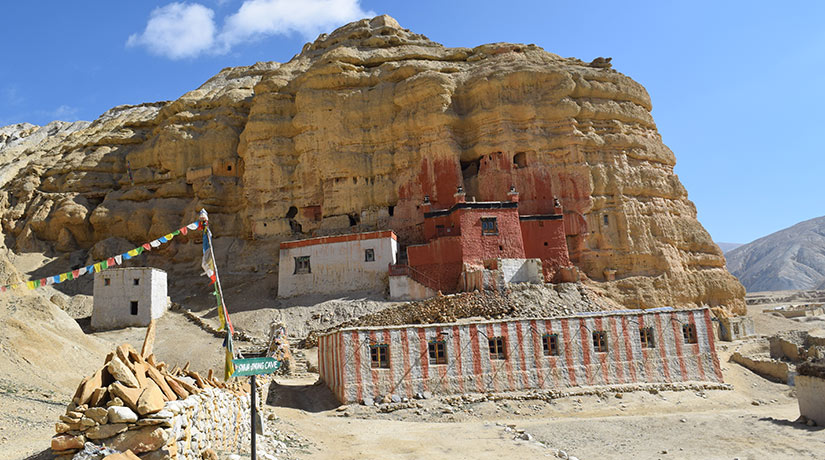
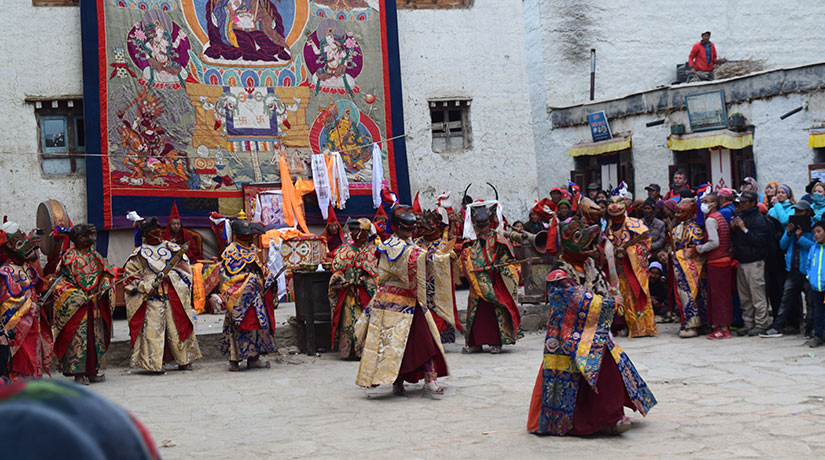
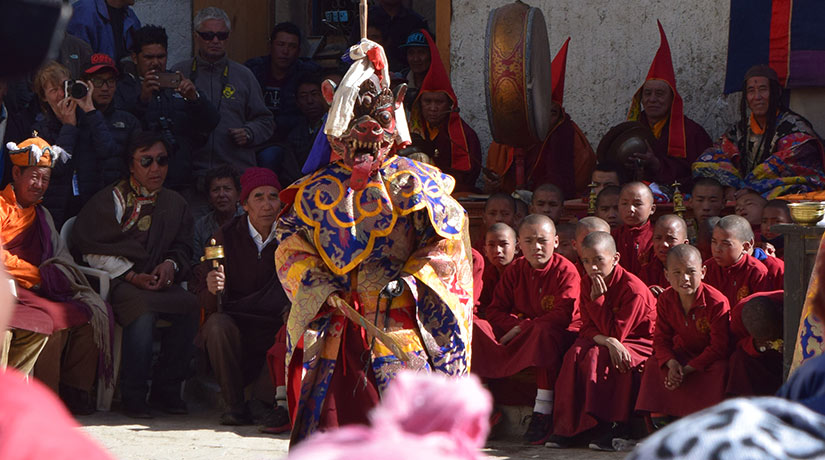


The Tiji was/is one of the most important religious and cultural festival in the Upper Mustang region of Nepal. Ancient mythology relates how the Tiji Festival was celebrated to mark the victory of good over evil. It is believed that what is now the Mustang region was in trouble, and was being destroyed by a demon who spread disease and took away water. Dorje Shönnufought and defeated this demon and the festival celebrates his victory with prayer chants and colorful dances.
Dorje Shönnu;Vajrakumara (Skt. Vajrakumāra; Tib.རྡོ་རྗེ་གཞོན་ནུ་,Wyl. rdo rje gzhon nu)known also as Dorje Phurba, Vajrakila, or Vajrakumar) is the name of a deity in Vajrayana Buddhism, an age-old Buddhist practice in India and Nepal. The Buddhist masters Padmasambhava, Vimalamitra and Shilamanju (of Nepal) went on to introduce this practice to Tibet during the 8th century CE, where it then branched into many lineages.
Padamasambhava instructed the major steps in the sacred dance of Vajrakila at Samye Monastery in Tibet. Chhöde Monastery at Lo Manthang in Upper Mustang is famous for its performance of Vajrakila practice and ritual.
However, the Tiji Festival in Upper Mustang did not start until the end of 17th century, when the Mustangi King Samdup Rabten invited Sakya Trizin (Sakya Thorn holder) Ngawang Kunga Sonam to come to Lo Manthang. He stayed at Lo Manthang’s Chhöde Monastery and performed the special Vajrakila ritual for the wellbeing of all sentient beings, and also to dispel all negative elements in Mustang.
Since then, the monks of Chhöde Monastery have been performing this religious dance every year in Lo-Manthang, over three days in the courtyard of Mustang Royal Palace. Originally it was performed at the end of the twelfth month of the Tibetan calendar, but nowadays it is performed during third Tibetan month (May).
The main dancer (Tsowo) head is selected rotationally from the monastery. Actually it’s an intensive ritual practice. The head dancer completes a three-month retreat before the main event. Members of the Mustang royal family and all the villagers of the seven provinces of Upper Mustang (Lo Chhödun) participate in this sacred dance, which is accompanied by many rituals. In the Mustangi (Lobo) dialect it is pronounced as Tiji (or Tenchi or Ten-pa-chyi-rim-dho meaning A ritual worship for the wellbeing of the kingdom) and is a part of the meditation practice based on the Tantra text related to Vajra Kumara (Vajra Kila).
There are two kinds of activities in the build-up to the meditation: first, peaceful dance steps, followed by the subjugation of negative elements, depicted in the Mele or second stage of the dance. There are three major stages of the dance ritual. In the preliminary part of the dance, there are 15 steps. Then in the main part, the ‘generation of the celestial palace’ and ‘generation of deities’ are depicted with two steps. In conclusion, there are steps to clear away eternal and nihilistic views and to provide auspiciousness. Different poses and gestures signify different processes of meditation in symbolic ways, and all of the dance steps have deeper meanings. The obstacles in life are believed to be cleared away by seeing these steps with faith and respect.
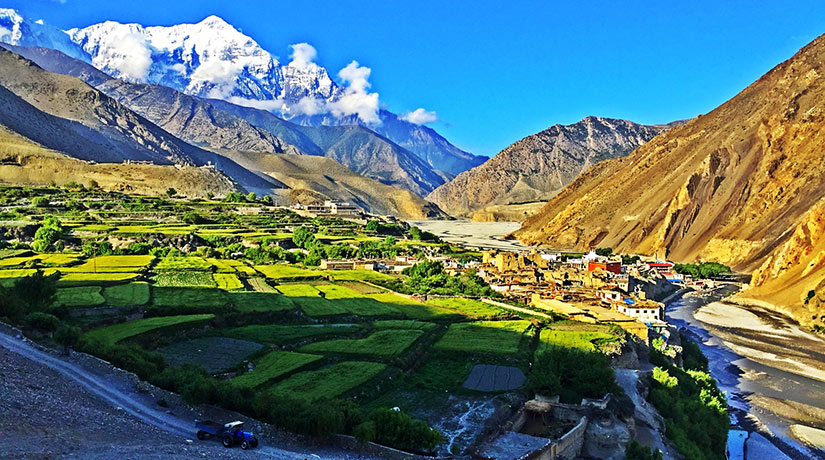
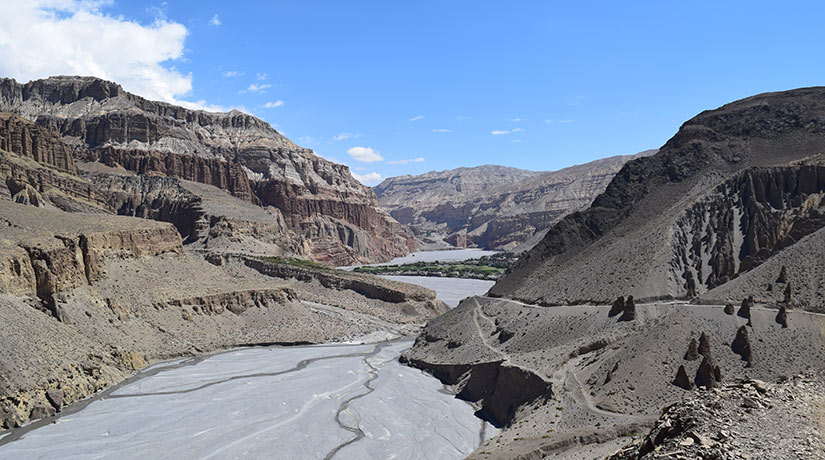
Upper Mustang is a remote area by the Tibetan border. Once an independent kingdom, Mustang is closely tied to Tibet in terms of language and culture. From the 15th to the 17th centuries, its strategic location granted Mustang control over the trade between the Himalayas and India. At the end of the 18th century, the kingdom was annexed by Nepal and became a dependency of the Kingdom of Nepal. In 2008, however, the monarchy ceased to exist by order of the Government of Nepal. The last king Jigme Dorje Palbar Bista died in 2016. His ancestor, the warrior Ame Pal, founded the Buddhist kingdom in 1380 and built much of Lo Manthang.
As Tiji is a lunar festival, every year the dates are different.
Outline Itinerary
Day 01: Kathmandu (4265 ft / 1300 m)
Day 02: Kathmandu – Pokhara (2900 ft /884 m)
Day 03: Pokhara to Jomsom (9000 ft / 2700m)
Day 04: Kagbeni to Chaile (10,667 ft / 3200m),
Day 05: Chaile to Syangbochen (10,500 ft / 3150m),
Day 06: Syanbochen to Gemi (12,167 ft / 3650m),
Day 07: Gemi to Tsarang (12,167 ft / 3650m)
Day 08: Tsarang to Lo Manthang (12,533 ft / 3760m).
Day 09: In Lo Manthang (12,533 ft / 3760m).
Day 10: In Lo Manthang (12,533 ft / 3760m).
Day 11: Lomanthang to Dhakmar (12,733 ft / 3820m),
Day 12: Dhakmar to Samar (12,200 ft / 3660m).
Day 13: Samar to Kagbeni (9,367 ft / 2810m).
Day 14: Muktinath (3760m) to Jomsom (9000 ft / 2700m)
Day 15: Jomsom to Pokhara flight, then Pokhara to Kathmandu
Day 16: Depart Nepal
What's included?
- Annapurna Conservation Area entry permits fees and Trekkers Information Management System (TIMS).
- Hotel in Kathmandu and Pokhara is included.
- Teahouse (twin sharing basis room)
- Experienced English speaking guide/leader, necessary experience local helpers
- All program according to itineraries on full board
- Kathmandu - Pokhara - Kathmandu Airlines Tickets.
- Pokhara - Jomsom - Pokhara Air tickets
- Guide's Pokhara - Jomsom - Pokhara air tickets
- Guide Airfare for Kathmandu - Pkr - Ktm return trip
- Salary, insurance, food, accommodation of your guide and porters
- Porters or Horses to carry your luggage on treks (Per person 10-kilogram luggage).
- Restricted Area Permit
What's not included?
- Travel insurance / Medical evacuation in case of emergency (Compulsory)
- Personal trekking Equipment except mentioned.
- Tips for trekking staff and driver.
- Any others expenses which are not mentioned in Price Includes section.
- Personal expenses like beverages (mineral (Bottled) water, alcohol, soft drinks), telephone bills, laundry, bar bills and personal tips etc.
- Dinner in Kathmandu and Pokhara
Kathmandu (4265 ft / 1300 m)
30 Min. Hotel B,B
Upon arrival, you will be greeted by Bodhi Adventures representative with Marigold garland , who will assist you and arrange your luggages and transfer to the hotel.
Restricted Area Permit Issue and Logistics Arrangement, Kathmandu (4265 ft / 1300 m)
Hotel in Kathmandu B, B
The Restricted Area Permit for Upper Mustang requires trekkers to present their original passports. Today, we will issue the permit and ensure all logistics are properly checked and prepared.
Travel from Kathmandu to Pokhara by tourist bus.
Alternatively, you can fly from Kathmandu to Pokhara. Transfer to the airport for a 30-minute flight, offering excellent mountain views to the north, weather permitting. Upon arrival in Pokhara, transfer to the hotel. After lunch at the hotel or a local restaurant, enjoy a warm-up hike to the Peace Pagoda (Stupa), crossing Phewa Lake by boat. This hike helps assess the trekkers' abilities and offers stunning views of the Annapurna range, including the sacred Fishtail Mountain (Machapuchare), its reflection on Phewa Lake, and the picturesque Pokhara Valley. Dinner in the evening. Overnight stay at the hotel.
After an early breakfast, drive to Pokhara Airport, take a 20-minute morning flight to Jomsom. From there, enjoy a 3-hour trek along the Kali Gandaki River to Kagbeni, with stunning views of Dhaulagiri, Tukuche, Dhampus, and Nilgiri mountains. Explore Kagbeni, a fortified village known for its Tibetan architecture and monastery. Overnight stay in a lodge.
Kagbeni to Chaile (10667 ft / 3200m)
Teahouse Lodge
Today’s trek takes approximately 5 hours and 30 minutes, following the trail along the Kali Gandaki River. Stop for lunch at Tangbe and pass through the picturesque villages of Tangbe and Chusang, featuring chortens, mani walls, barley fields, and distant caves. Arrive at Chaile village, where you can explore the area. From Chaile, enjoy views of Nilgiri and Tilicho Peak. Overnight stay in a lodge.
Chaile to Syangbochen (10500 ft / 3150m)
Lodge B, L, D
Today's trek takes approximately 6 hours, with a mix of steep and gentle climbs, crossing the Yamdo Pass at 3,550m and 3,960m. Along the way, visit the fascinating Mustangi (Bhotya-style) village of Samar, passing chortens and barley fields. Enjoy stunning views of Nilgiri, Tilicho Peak, and the Damodar Himal range. Overnight stay in a lodge.
Syanbochen to Gemi (12167 ft / 3650m)
Teahouse Lodge B, L, D
Today's trek takes about 5 hours, with a gradual ascent leading to the 3,950m Nyi La Pass, offering excellent views of Mustang, the Damodar Himal range, the Annapurnas, and Nilgiri. Stop for lunch at Gemi, followed by a visit to Ghami. Overnight stay in a lodge.
Gemi to Tsarang (3650m)
Teahouse Lodge B, L, D
Today's trek takes half a day, arriving in Tsarang in time for lunch. In the afternoon, explore the village and visit the Tsarang monastery. Overnight stay in a lodge.
Tsarang to Lo Manthang (12533 ft / 3760m)
Teahouse Lodge B, L, D
This day involves an approx. 4 hrs. normal trek, crossing a 3900m pass, from where one has a view of Lo Manthang. Arrival at Lo Manthang for lunch. Afternoon observe Teeji Festival First Day starts in the afternoon. Stay in a lodge.
In Lo Manthang
Teahouse Lodge B, L, D
Today, embark on a Jeep excursion to explore the Choser, Niphu, and Garphu Bhotya villages, as well as Guru Gompa and the caves in these areas, located north of Lo Manthang and near the Tibet border. Return to Lo Manthang for lunch, followed by an afternoon of observing the Tiji Festival. Overnight stay at the lodge.
In Lo Manthang
Teahouse Lodge B, L, D
This morning, visit the Namgyal and Tingkar monasteries and explore the nearby caves. Return to Lo Manthang for lunch, followed by observing the final day of the Tiji Festival. Overnight stay in Lo Manthang.
Lomanthang to Dhakmar (12733 ft / 3820m)
Teahouse Lodge B, L, D
Today, we cross the Samduling Pass at 4,090m and reach Ghar Gumba (3,950m), the oldest monastery, built by Guru Rinpoche in the 8th century before his journey to Tibet. After having lunch at Ghar Gumba, we continue the trek to Dhakmar. Overnight stay at a guesthouse.
Dhakmar to Samar (12200 ft / 3660m)
Teahouse Lodge B, L, D
Today, we trek to Ghami and retrace our route back to Samar. We stop for lunch at Pangmochen before continuing on to Samar. Overnight stay at a lodge.
Samar to Kagbeni
Teahouse Lodge B, L, D
Today, we descend to Kagbeni, stopping for lunch in Tangbe before continuing on to Kagbeni.
Muktinath visit then Jomsom
Teahouse Lodge B, L, D
In the morning, we drive to Muktinath (3,760m) in a local jeep. This site is a popular pilgrimage destination for both Hindus and Buddhists. After exploring Muktinath, we return to Jomsom, passing through Kagbeni. The trek concludes with an overnight stay at a guesthouse.
Jomsom to Pokhara to Kathmandu
Hotel B, L
Fly from Jomsom to Pokhara, followed by a flight from Pokhara to Kathmandu (please note that the flight from Jomsom is subject to weather conditions). Overnight stay in a Kathmandu hotel.
Transfer to Tribhuvan International Airport for your departure from Kathmandu to your home country.